Choosing an OEM hair styling manufacturer can shape product quality, launch timing, and customer trust. The right partner should do more than fill bottles or assemble tools. They should understand your product brief, explain their production process, and show how they manage consistency from sample to finished batch. Small details matter. A pump that leaks during transport or a formula that feels different after several weeks can create costly problems.
So, how to choose an OEM hair styling manufacturer with confidence? Start by checking experience with products similar to yours, such as heat protectant sprays, styling creams, or salon-grade hair dryers. Ask for relevant samples, clear specifications, and realistic production timelines. Review quality checks, packaging options, communication practices, and minimum order quantities. If a supplier makes broad promises but gives few measurable details, pause. That is worth questioning.
A polished presentation is not proof of reliable production. Look for evidence: documented procedures, consistent sample performance, and direct answers about materials and testing. Where applicable, confirm that product claims and safety information are supported by appropriate documentation. You may not know every answer at the first meeting. That is normal. Keep a written list of open questions, compare suppliers against the same criteria, and note where your own requirements are still unclear. This guide explores those practical checks, helping brands make a considered choice without treating the lowest quote as the whole story.
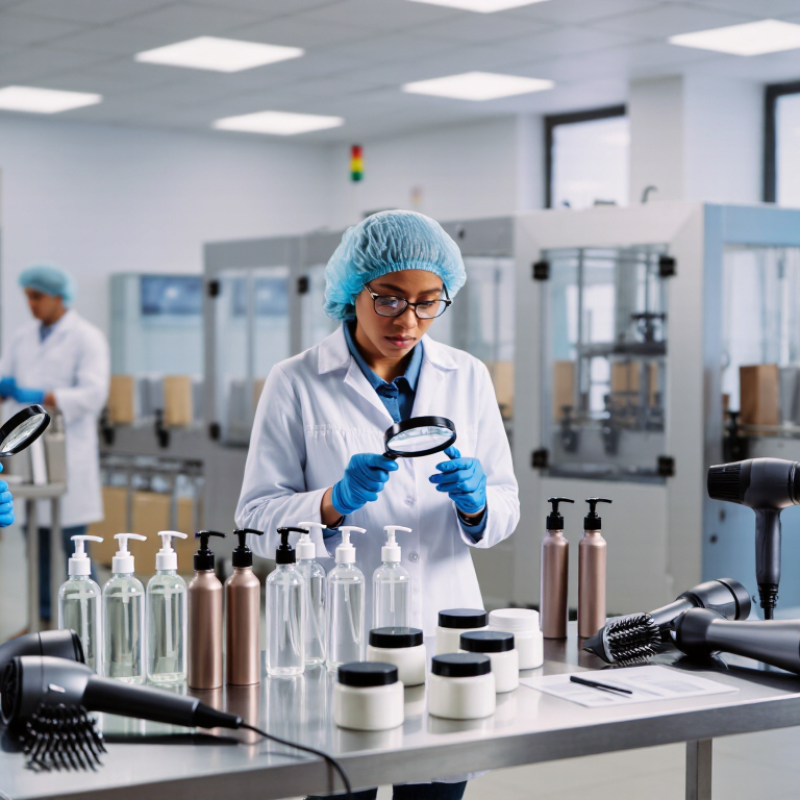
Before contacting an OEM hair styling manufacturer, define the user, use case, and sales region. Specify hair types, styling frequency, target price, and expected order volume. Describe the product in measurable terms: temperature range, number of heat settings, cord length, voltage, weight, and required attachments. Decide which parts need custom tooling and which can use existing components. Vague goals often create costly revisions.
Set your manufacturing goals alongside the product brief. Grand View Research estimated the global hair styling tools market at about US$30.1 billion in 2023 and projected 5.3% annual growth from 2024 to 2030. That forecast signals opportunity, not guaranteed demand. Define acceptable sample lead times, minimum order quantities, defect limits, inspection steps, and packaging needs before comparing suppliers. Ask how the factory verifies temperature consistency and electrical safety, and request records from relevant tests. One assumption may still be wrong: a feature customers like in a sample may not justify its added cost at production scale.
Tips: Send a one-page specification sheet and annotated reference photos. Test samples on different hair textures. Record measured heat, handling comfort, and defects; revise the brief before approving production.
When choosing an OEM hair styling manufacturer, inspect expertise beyond a polished sample. Ask for production records, failure data, and trained engineering staff. An experienced team should understand heat control, material compatibility, ergonomic design, and batch consistency. For cosmetic styling products, ISO 22716-based Good Manufacturing Practices should guide mixing, filling, hygiene, and traceability. For heated tools, request documented electrical, thermal, and insulation testing against relevant safety standards.
Equipment reveals operational maturity. Examine temperature calibration, automated filling, torque control, leak testing, and packaging inspection. Ask how often instruments are calibrated. The ISO Survey 2022 recorded 1,265,216 ISO 9001 certificates worldwide, but certification alone does not prove strong factory execution. Review recent audit findings instead. The EU Safety Gate 2023 report identified cosmetics as 32% of dangerous-product notifications, showing why ingredient control and post-market monitoring matter.
Tips: Visit the facility if possible. Watch one full production run, not a staged demonstration. Request certificates, test reports, supplier records, and corrective-action logs. Confirm compliance for every target market, including labeling, claims, materials, and electrical requirements. A manufacturer may provide excellent prototypes yet struggle with scale. That gap deserves honest testing. Also, no audit is perfect; repeat inspections and independent laboratory checks can expose weaknesses hidden during one visit.
A reliable OEM partner should prove quality through samples, not promises. Grand View Research valued the global hair styling products market at about USD 28.4 billion in 2023. This competitive market demands consistent performance. Ask for samples from different production batches. Compare texture, fragrance, hold, spreadability, and residue. A gel should form evenly between two fingers. A wax should soften without becoming oily. These simple checks reveal weaknesses quickly.
Testing must continue beyond visual inspection. Request pH, viscosity, microbial, stability, and packaging compatibility results. ISO 17516 provides useful guidance for cosmetic microbiological quality. Accelerated stability testing can expose separation, color changes, or unpleasant odors. Test the product on several hair textures and after repeated styling. One sample may look excellent, yet fail after heat exposure or long storage. No test predicts every salon routine. That limitation deserves honest discussion.
Choosing an OEM hair styling manufacturer requires comparing more than the quoted unit price. Ask each supplier to price the same product specifications, materials, attachments, packaging, and quality checks. A lower quote may exclude mold fees, sample costs, or custom packaging. Request a clear breakdown. That makes differences easier to spot.
Minimum order quantities affect both unit cost and inventory risk. Ask for pricing at several quantities, such as 500, 1,000, and 3,000 units. Confirm whether each color or model has a separate minimum. A small trial order can reveal issues before you commit, though its unit price may be higher. Even a careful spreadsheet can miss storage costs or slow-moving stock.
Production lead times should include sampling, revisions, material sourcing, assembly, inspection, and shipping preparation. Ask whether quoted days are business days, and request recent delivery records or a realistic production schedule. Check how peak-season orders affect capacity. I would leave a buffer for sample changes; they can take longer than expected. A fast estimate is not a reliable delivery promise. Compare all three factors together before choosing a supplier.
| Product Type | Indicative Unit Price (USD) | Typical MOQ | Sample Lead Time | Typical Production Lead Time | Factors That Can Affect Cost or Timing |
|---|---|---|---|---|---|
| Hair dryer | $8–$25 | 500–2,000 units | 7–20 days | 30–60 days | Motor type, wattage, heat and speed settings, attachments, housing materials, and packaging. |
| Flat iron | $6–$18 | 500–2,000 units | 7–20 days | 30–60 days | Plate material and size, temperature controls, heating performance, display, and cord design. |
| Curling iron or wand | $5–$16 | 500–2,000 units | 7–20 days | 30–60 days | Barrel material and diameter, temperature settings, included accessories, and control features. |
| Hot air brush | $8–$22 | 500–2,000 units | 7–20 days | 30–60 days | Motor and airflow design, interchangeable attachments, brush materials, and electrical configuration. |
| Heated styling brush | $5–$15 | 500–2,000 units | 7–20 days | 30–60 days | Heating element, bristle design, temperature control, safety features, and finish options. |
These are indicative planning ranges, not supplier quotations. Actual prices and MOQs vary by order volume, specifications, customization, packaging, and destination market. Production lead times generally begin after specifications and samples are approved; freight, tooling, and required compliance testing may add time or cost. Confirm applicable electrical safety and market requirements with the manufacturer before placing an order.
Reliable communication is easy to underestimate until a sample needs correction. Ask who will handle your account, how quickly they typically respond, and how they record design changes. Share a sample brief with measurements, finish requirements, packaging details, and a requested revision. Notice whether the reply addresses each point or leaves gaps. Small gaps can grow. Confirm how urgent issues are escalated, especially across time zones.
Tips: Request a written capacity overview. Ask about current production load, monthly output, equipment, and backup staffing. Check whether the figures reflect normal operations, not just a best-case week. A factory visit or video walkthrough can help, but it cannot replace documented records.
Put key expectations in the contract, including approved specifications, inspection criteria, lead times, payment milestones, and remedies for delays or defects. Clarify who owns tooling and how changes affect cost and schedule. For future growth, ask how the manufacturer would move from a pilot run to larger orders. Request examples of capacity planning, while protecting confidential information. Forecasts are uncertain; I would not treat a single confident promise as proof. Compare stated capacity with equipment, staffing, and production records before committing.
Review production records, failure data, and engineering experience. Ask how the team controls heat, material compatibility, ergonomics, and batch consistency. Samples can mislead.
Look for calibrated temperature tools, filling equipment, torque controls, leak tests, and packaging inspections. Ask how often instruments are checked. Watch a full production run, if possible.
Request recent audit findings, test reports, supplier records, and corrective-action logs. Heated tools need documented electrical, thermal, and insulation tests. Cosmetic products need clear hygiene and traceability procedures.
Confirm labeling, product claims, materials, and electrical requirements for each target market. Ask for evidence, not just assurances. Requirements can differ.
Send a brief with measurements, finish details, packaging needs, and a requested revision. Check whether the reply addresses every point. Small gaps matter.
Ask about monthly output, current workload, equipment, and backup staffing. Compare those figures with production records. A best-case week is not a reliable forecast.
Specify approved product details, inspection criteria, lead times, payment milestones, and remedies for defects or delays. Clarify tooling ownership and how changes affect cost and schedule.
Ask how it would move from a pilot run to higher volume. Request capacity-planning examples and compare promises with staffing and equipment. I may still miss something.
Choosing the right OEM partner starts with defining your product requirements and manufacturing goals. Clarify the types of hair styling products you want to develop, the features and materials you prefer, your target customers, and the standards the finished products should meet. Then assess each manufacturer’s relevant experience, equipment, production processes, and quality-control capabilities. Ask for samples and use practical testing to evaluate performance, consistency, durability, and packaging before committing to a larger order.
When considering how to choose an OEM hair styling manufacturer, compare pricing alongside minimum order quantities and production lead times, rather than focusing on unit cost alone. Confirm that communication is clear and responsive, and review contract terms, responsibilities, quality expectations, and timelines carefully. Finally, consider whether the manufacturer has enough capacity and flexibility to support future product updates or increased order volumes as your business grows.

JGM Beauty