Choosing a hair appliance requires more than checking heat settings, wattage, or a familiar logo. A reliable product should also meet recognized safety and quality requirements. The practical question is simple: what certifications should hair appliance manufacturers have?
The answer depends on the target market, product type, and electrical design. In the United States, manufacturers often pursue UL or ETL certification for safety evaluation. In Europe, CE marking may involve compliance with applicable electrical safety, electromagnetic compatibility, and chemical regulations. UKCA requirements may apply to products sold in Great Britain. RoHS and REACH compliance can also address restricted substances and chemical risks. Hair dryers, straighteners, and curling irons may require testing against relevant IEC or regional standards, including protection from overheating, electric shock, and abnormal use.
A responsible manufacturer should maintain documented testing, traceable components, factory inspections, and quality controls. ISO 9001 certification can support consistent production, although it does not replace product safety certification. Look for clear reports, current certificates, and markings that match the exact model number. Details matter. A plug, thermal fuse, hinge, or ceramic plate can affect safety.
Certification is not a magic shield. A certificate may cover one model, one factory, or one market only. Some online listings also use vague claims that deserve closer review. Manufacturers should explain their testing scope openly and update records when designs change. Buyers should remain careful, too. Standards evolve, and compliance can fail through poor assembly or weak supplier control. Good documentation helps, but real reliability appears during everyday use.
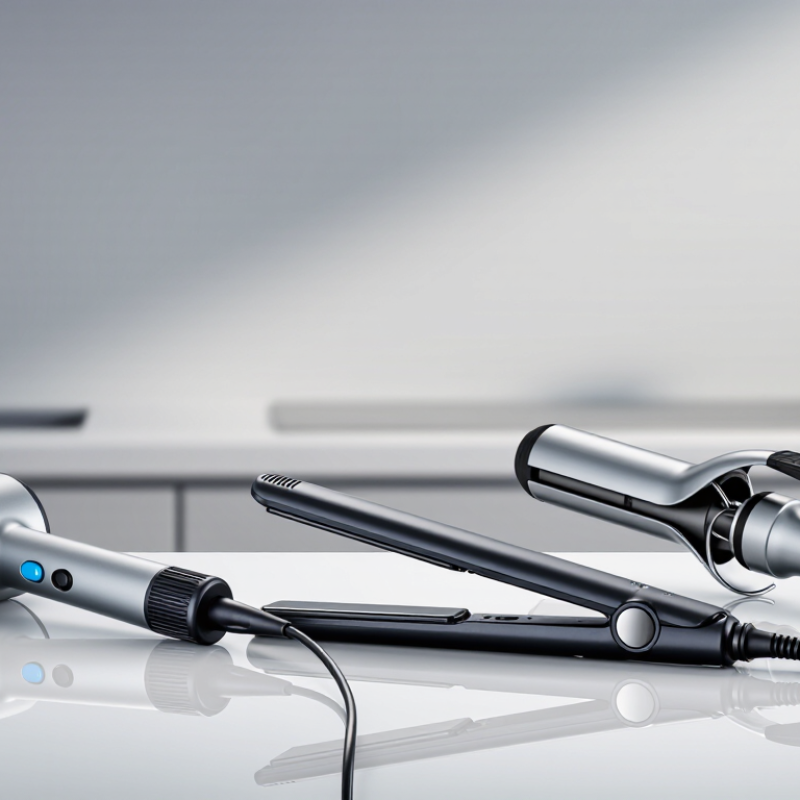
Certification means more than placing a familiar mark on a hair dryer or styling tool. It shows that safety claims were tested, documented, and controlled during production. Manufacturers commonly assess IEC 60335-1 and IEC 60335-2-23, covering household appliances and hair-care equipment. They may also need electromagnetic compatibility, chemical, energy, and market-specific requirements. A CE mark is usually a manufacturer’s declaration, not universal third-party certification.
The evidence should include thermal tests, insulation checks, abnormal-operation tests, and cord-bend testing. Factory controls matter too. An approved sample can become unsafe when suppliers change plastics, heating elements, or wiring.
In 2023, the European Commission’s Safety Gate report recorded 3,412 consumer-product alerts. That number shows why traceability cannot remain a paperwork exercise. Each appliance should connect to a batch record, test result, and responsible production line.
Quality management supports this process. ISO’s 2023 Survey reported 1,265,216 ISO 9001 certificates worldwide. However, ISO 9001 does not prove that a hair appliance itself is electrically safe. It proves that the manufacturer operates a structured quality system.
The distinction is easy to miss. It should not be. In practical factory reviews, small details often decide reliability: a loose strain relief, incomplete heat testing, or an outdated component specification. Certification is valuable, but it is not a magic shield. Some requirements may feel excessive, and that criticism can be fair. Still, every skipped test creates a risk that customers cannot see.
Hair appliance makers should treat electrical safety certification as a design requirement, not a final marketing step. The core reference is IEC 60335-1, which covers household appliance safety. Hair dryers, straighteners, and curling appliances may also require IEC 60335-2-23, which addresses appliances for skin or hair care. Requirements can differ by destination market.
Testing should examine insulation, leakage current, grounding, temperature rise, abnormal operation, and cord durability. Moisture protection matters too, especially for bathroom use. A qualified laboratory can assess samples against the applicable standards and identify weaknesses before production. Factory inspections and production-line checks help confirm that certified designs remain consistent. A small wiring change can affect safety.
Tips: Keep test reports, component records, and revision history together. Confirm that heating elements, plugs, switches, and thermal cut-outs match the approved design. Ask whether the laboratory is recognized in your target market. Do not rely on a certification symbol alone. It may cover one model, one voltage range, or one manufacturing site. In practice, certificates can create false confidence when documentation is outdated. Makers should review certification after redesigns, supplier changes, or software updates. The process is less glamorous than product styling, but a loose terminal or overheated handle can reveal the difference between paperwork and dependable protection.
Core electrical safety requirements for hair dryers, straighteners, curling irons, and other personal hair-care appliances vary by destination market. The chart shows typical nominal household supply voltage, while the references below identify commonly used safety and conformity frameworks.
International safety requirements for appliances used for skin or hair care, including many hair dryers and styling appliances.
A widely used North American safety standard covering household personal-grooming appliances.
European and UK market conformity routes typically address electrical safety, electromagnetic compatibility, and applicable environmental requirements.
Exact certification, testing, marking, and documentation requirements depend on the destination market, appliance design, rated voltage, and applicable legislation.
Hair appliance makers should match each product with the correct safety standard, not rely on one general certificate. Dryers commonly require evaluation under IEC 60335-2-23 or equivalent regional standards. Testing should cover electric shock, overheating, airflow blockage, motor durability, and flame resistance. A dryer needs special attention near water. Its plug, insulation, and leakage current deserve careful review.
Straighteners and curlers create different risks. Their heated plates or barrels should undergo temperature-control, surface-temperature, and abnormal-operation tests. IEC or EN 60335-2-23 may apply, depending on the market and product design. Makers should also verify thermal fuse performance, cord flexibility, housing strength, and automatic shutoff timing. A small delay can matter when an appliance is left on a bathroom counter. It sounds minor. It is not.
Beyond safety, reputable manufacturers usually arrange electromagnetic compatibility testing and confirm material compliance for each destination market. RoHS and REACH documentation may support restricted-substance and chemical-safety claims, but these records do not replace electrical certification. Independent laboratory reports, factory quality controls, traceable serial numbers, and production audits strengthen reliability. Certificates can age. Components change, suppliers change, and a previous test may no longer represent the current model. That uncomfortable gap deserves regular review. Makers should keep technical files, test samples, user instructions, and corrective-action records available for inspectors and customers. A professional certification partner can identify missing evidence before shipment, although no certificate can replace careful engineering.
Hair appliance makers need more than electrical safety approval. Environmental and materials compliance should begin with a clear product substance list. It should cover plastics, heating elements, coatings, adhesives, cords, and packaging.
RoHS testing helps control restricted substances in electrical components. REACH documentation examines chemical content and supplier responsibilities. WEEE obligations may apply when products enter regulated markets.
Requirements differ by country, so a single certificate rarely covers every sale. It is easy to overlook small parts. A colored coating can still require evidence.
Manufacturers should request material declarations, safety data sheets, and laboratory test reports from suppliers. Independent testing through an ISO/IEC 17025-accredited laboratory strengthens technical credibility. Records should identify each component, supplier, test date, and applicable regulation. This traceability makes recalls and design changes more manageable. CE marking may demonstrate conformity in certain markets, but it is not automatically an environmental certification. That distinction matters.
Environmental responsibility also includes packaging weight, recycled content, energy use, and repairable design. An ISO 14001-certified management system can support factory controls, but it does not prove product compliance. A practical audit may reveal incomplete supplier documents or inconsistent plastic descriptions. That is not failure, but it needs correction before mass production. Compliance work is sometimes treated as paperwork. In reality, it affects sourcing, engineering, testing, and customer trust.
A credible hair appliance maker needs more than a certificate on the office wall. Its factory quality system should control design reviews, supplier approval, assembly checks, and final testing. For heating tools, inspectors may verify insulation, leakage current, temperature limits, cord strain relief, and automatic shutoff performance. Each measurement should link to a calibrated instrument and a recorded test result. That sounds simple. It is not. A loose terminal or untracked firmware change can weaken an otherwise careful process. ISO 9001 can provide a framework for these controls, while product safety, electromagnetic compatibility, and material requirements depend on the destination market. Independent laboratories and local compliance specialists should confirm the applicable requirements before production scales.
Ongoing maintenance matters more than the initial audit. Factories need internal audits, corrective action reviews, calibration schedules, and documented training refreshers. Production samples should be checked after tooling changes, supplier substitutions, or heating-element adjustments. Traceability should reach the batch, operator, component lot, and inspection record. When a failure appears, the response should identify the cause, contain affected units, and verify the fix. A rushed retest is not enough. Mistakes still happen. Some teams treat certification maintenance as paperwork, then discover gaps during a customer audit or field complaint. Regular management reviews can expose these weak points, but only when findings are discussed honestly and assigned clear owners. Records must stay current. A certificate may remain valid while the actual process quietly drifts.
| Certification, Standard, or Requirement | Primary Purpose | Applies To | Typical Evidence | Maintenance and Review Frequency |
|---|---|---|---|---|
| ISO 9001:2015 Quality Management System | Demonstrates a documented, risk-based system for consistent production, inspection, corrective action, and customer feedback. | The manufacturing organization and its relevant production sites. | Accredited certification audit, quality manual or process documentation, internal audits, management reviews, and corrective-action records. | Usually a three-year certification cycle with surveillance audits during the cycle; internal audits and management reviews should be scheduled at planned intervals. |
| ISO 14001:2015 Environmental Management System | Controls significant environmental impacts such as energy use, waste, emissions, and legal obligations. | Factories and operational sites with defined environmental aspects. | Environmental policy, legal register, aspect-and-impact assessment, waste records, objectives, audits, and improvement plans. | Normally follows a three-year certification cycle with periodic surveillance audits; environmental objectives and compliance records require regular review. |
| ISO 45001:2018 Occupational Health and Safety Management System | Provides a structured approach to identifying workplace hazards, reducing risks, and investigating incidents. | Manufacturing facilities, warehouses, laboratories, and other controlled workplaces. | Risk assessments, worker consultation records, training logs, emergency drills, incident investigations, and internal audits. | Usually a three-year certification cycle with surveillance audits; hazard assessments and incident controls should be updated when processes or equipment change. |
| IEC 60335-1 | Sets general safety requirements for household and similar electrical appliances, including protection against electric shock, overheating, and mechanical hazards. | Electrical hair appliances such as dryers, straighteners, curling appliances, and related products. | Product safety test reports, construction review, critical-component records, sample identification, and production consistency controls. | Not normally a standalone factory-management certificate; testing and technical-file review should be repeated when design, components, software, or applicable requirements change. |
| IEC 60335-2-23 | Provides particular safety requirements for appliances intended for the care of skin or hair, used together with the applicable general requirements. | Hair dryers and other applicable hair-care electrical appliances. | Clause-by-clause test report, temperature measurements, abnormal-operation tests, insulation tests, and construction documentation. | Review the current edition and national deviations before each market launch; retest after changes to heating elements, motors, housings, controls, or intended use. |
| CISPR 14-1 and CISPR 14-2 | Addresses electromagnetic emissions and immunity for household appliances and similar equipment. | Powered hair appliances containing motors, switching circuits, electronic controls, or other potential sources of electromagnetic disturbance. | EMC laboratory report, test setup information, product configuration, cable details, and corrective-action records for failures. | Reassessment is recommended after changes to circuitry, motor type, PCB layout, firmware, enclosure, or cable arrangement. |
| RoHS Compliance | Restricts specified hazardous substances in electrical and electronic equipment placed on applicable markets. | Products, subassemblies, cables, solder, coatings, plastics, and selected components within scope. | Supplier declarations, material declarations, homogeneous-material assessments, risk-based laboratory tests, and technical documentation. | Update the compliance review when restricted-substance rules change or suppliers, materials, coatings, and components are changed; maintain traceable supplier records. |
| REACH Substance Compliance | Controls chemicals and requires information management for substances of concern in products and supply chains where applicable. | Materials, plastics, coatings, adhesives, cables, packaging, and articles supplied to applicable markets. | Supplier declarations, restricted-substance screening, safety information, and documented supply-chain communication. | Monitor updates to substance lists and legal duties; review declarations periodically and whenever materials or suppliers change. |
| ISO/IEC 17025 Testing Laboratory Competence | Confirms that a testing laboratory operates competently and produces technically valid results within its accredited scope. | In-house or independent laboratories performing safety, EMC, environmental, or material tests. | Accreditation scope, validated methods, equipment calibration, proficiency testing, uncertainty evaluation, and technical records. | Accreditation bodies conduct periodic assessments; equipment calibration and method verification follow defined schedules and risk-based intervals. |
| Factory Production Control and Change Management | Ensures that mass-produced units remain consistent with the tested and approved product configuration. | Production lines, incoming inspection, assembly, final testing, packaging, and outsourced processes. | Approved bill of materials, work instructions, inspection plans, calibration records, first-article approval, traceability, and nonconformity reports. | Review at every engineering or supplier change; perform periodic product audits and retain production and test records for the period required by applicable law or contract. |
Note: Certification scope, audit intervals, testing requirements, and legal obligations vary by product design and destination market. Product standards and regulatory compliance should be verified against the latest applicable editions before shipment.
It shows that safety claims were tested, documented, and controlled during production. It is not a magic shield. The product still needs careful engineering and factory checks.
Hair dryers commonly require evaluation under IEC 60335-2-23 or equivalent regional standards. Testing should examine electric shock, overheating, blocked airflow, motor durability, and flame resistance. Water exposure needs special attention.
Testing should cover plate temperature, surface heat, abnormal operation, and temperature control. Manufacturers should also check thermal fuses, cord flexibility, housing strength, and automatic shutoff timing. A small delay matters.
Not always. A CE mark is usually a manufacturer’s declaration of conformity. It does not automatically prove independent testing or universal product safety.
No. ISO 9001 shows that a structured quality system operates within the manufacturer. It does not prove that a specific dryer or curler passed electrical safety tests.
Each appliance should connect to a batch record, test result, supplier, and production line. A changed plastic or heating element can alter safety performance. Paperwork alone is not enough.
Manufacturers should collect material declarations, safety data sheets, and laboratory reports. Records should cover plastics, coatings, adhesives, heating parts, cords, and packaging. Even a colored coating may need evidence.
Usually not. Requirements differ between countries and product designs. Electrical, chemical, energy, packaging, and waste obligations may need separate reviews. That gap is easy to underestimate.
Understanding what certifications should hair appliance manufacturers have is essential for building safe, reliable, and market-ready products. Certification demonstrates that a manufacturer has addressed electrical safety, user protection, product performance, and quality control throughout the design and production process. Core requirements may include testing for insulation, overheating protection, wiring, plugs, electromagnetic compatibility, and safe operation under normal and abnormal conditions. Different appliances may also require product-specific evaluation, since dryers, straighteners, and curlers use different heating systems, airflow designs, temperature controls, and surface materials.
Manufacturers should also consider environmental and materials compliance, including restrictions on hazardous substances, responsible material selection, energy efficiency, and proper product labeling. A dependable factory quality system supports consistent production through documented procedures, inspections, calibration, traceability, and corrective actions. Certification is not a one-time achievement; ongoing audits, design reviews, safety testing, and process monitoring help ensure that products remain compliant when components, suppliers, or manufacturing methods change. Together, these practices strengthen consumer confidence and support long-term product quality.

JGM Beauty