Building a distinctive hair styling brand in China involves more than adding a logo to an existing product. It requires careful decisions about design, materials, performance, packaging, and production control. This guide explains how to customize hair styling tools for your brand through a practical and reliable process.
The journey usually begins with a clear product brief. Define the target user, styling purpose, voltage requirements, heating range, handle shape, and preferred materials. For example, a salon-focused straightener may need a longer cord, wider plates, and a heat-resistant grip. A travel model may require dual voltage, compact packaging, and a secure storage case. Small details matter.
Work with experienced manufacturers that can provide samples, factory information, quality records, and realistic production timelines. Review prototypes in actual use, not only under showroom lighting. Check heat consistency, switch durability, cable flexibility, surface temperature, and packaging protection. Ask for relevant safety testing and conformity documentation for each target market. Requirements can differ widely.
A polished sample is not proof of stable mass production. That is easy to forget. Production audits, incoming material checks, and pre-shipment inspections can reduce avoidable problems. Even so, no customization project is completely predictable. Colors may vary slightly, tooling costs may change, and an attractive feature may increase failure risks. Honest evaluation is essential.
With technical guidance, transparent communication, and documented quality controls, your brand can develop tools that look distinctive and perform consistently. The strongest result is not merely a beautiful product. It is a dependable styling experience that customers can use safely and confidently.
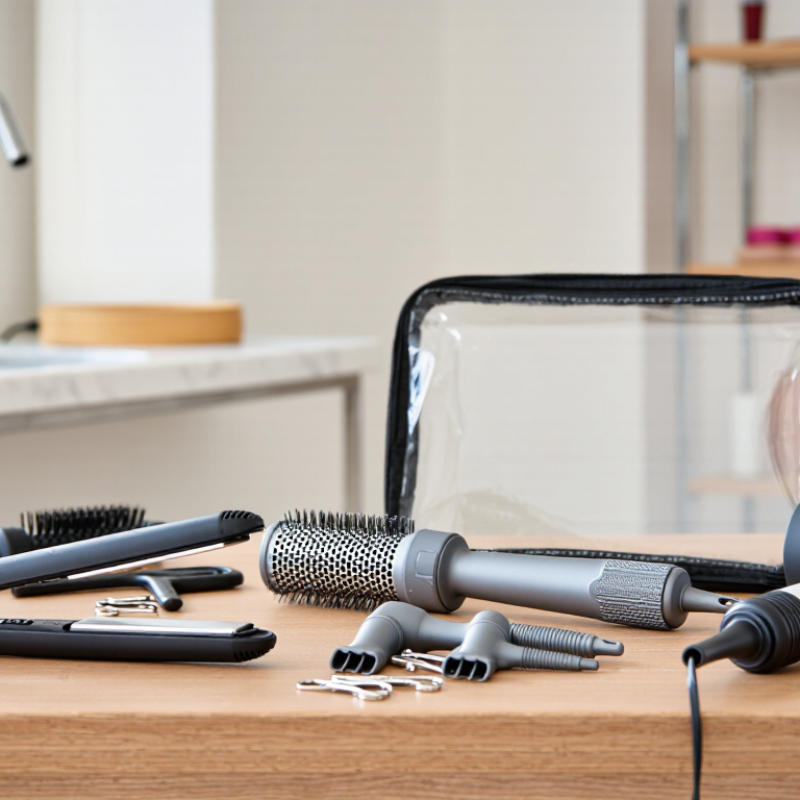
Defining your hair styling tool requirements is the first practical step in customizing products in China. Start with the user, not the factory. Describe hair types, styling habits, climate, and expected daily usage. A professional salon tool may need longer operation, stronger heating stability, and a longer cord. A home-use tool may require lighter weight and simpler controls.
Write measurable specifications. Set the target temperature range, heat-up time, plate or barrel size, airflow, noise level, voltage, plug type, and preferred materials. For example, a ceramic plate could measure 25 millimeters wide, reach 200°C, and heat evenly within 30 seconds. Include handle dimensions and button positions. Small details affect comfort. They also influence packaging and shipping costs.
Safety requirements need clear attention. Ask for overheat protection, automatic shut-off, insulation testing, and stable temperature control. Confirm the testing process, sample records, and applicable market requirements before production. A supplier’s experience with similar tools can reduce avoidable mistakes, but it does not replace independent verification. Your first specification may be incomplete. Mine often are. Test samples with different hair textures, wetness levels, and repeated usage. One sample may feel excellent for five minutes, then become uncomfortable. Revise the requirements after real handling, not only after reviewing photographs. Keep every change documented, including approved materials, color references, tolerances, and inspection points.
Start with your customers’ daily routines, not only current trends. Hair dryers support everyday use, while curling tools create defined styles. Heated brushes can shorten the learning curve. Think carefully.
List barrel size, plate width, heat settings, motor power, cord length, voltage, and plug type. Include storage needs and packaging dimensions. Small controls may frustrate users, even when the tool looks compact.
You can customize housing colors, surface textures, buttons, logos, packaging, manuals, and accessory kits. Avoid adding too many features at once. Extra buttons increase cost and confuse some users.
Physical samples reveal problems that digital drawings can hide. Check heat consistency, cable flexibility, switch response, grip comfort, and surface temperature. A small gap may look harmless on screen. It may feel obvious in your hand.
Ask about similar heated-tool projects completed during the past year. Request production photos, process documents, inspection records, and material details. A capable factory should explain its limits clearly. That honesty matters.
No. Compare samples from different production stages when possible. A polished prototype may not represent mass production quality. Measure heat-up time, temperature stability, cable strength, and insulation. Do not assume consistency.
Test the tool on different hair textures and record measured results. Check whether the handle becomes warm after several minutes. Press every button with dry and damp hands. Some details are easy to miss.
Confirm artwork dimensions, colors, warnings, instructions, and barcode placement. Use protective inserts to stop movement during shipping. Request a packaging sample and perform a drop test. Check crushed corners and loose accessories.
Define approved materials, inspection rights, acceptance standards, corrective actions, and revision records. Confirm applicable safety requirements for each destination market. Keep one approved sample for comparison. Leave room for doubt.
Building a successful private-label hair styling tool line in China begins with clearly defining your brand’s requirements, target customers, product functions, materials, appearance, and price range. The next step is to select suitable product types, such as hair dryers, curling irons, straighteners, or styling brushes, while deciding which features can be customized, including color, temperature settings, controls, accessories, and logos. Understanding how to customize hair styling tools for your brand also requires careful manufacturer evaluation. Review production experience, equipment, certifications, quality systems, communication, and sample capabilities before making a decision.
After selecting a reliable manufacturing partner, develop detailed product specifications, visual designs, prototypes, and packaging concepts. Test samples thoroughly for performance, durability, usability, and safety, then confirm all requirements before bulk production. A clear quality-control process should cover incoming materials, assembly, functional testing, final inspection, packaging, and shipment. Maintaining accurate documentation and verifying compliance with applicable market regulations will help ensure consistent quality and support a smooth product launch.

 JGM Beauty