Automatic hair curlers have changed the way many people style waves at home. But how do automatic hair curlers work in practical terms? The answer begins with a small motor, a heated curling chamber, and programmed timing controls. A user places a narrow section of hair near the opening. The device then draws the hair inside. Its rotating barrel wraps the strand around a heated core. After several seconds, it releases the curl automatically.
“Heat damages hair by denaturing the keratin protein,” dermatologist Dr. Zoe Diana Draelos has explained. This warning matters. A smart-looking curler can still overheat fragile, bleached, or damp hair. Better models combine adjustable temperature settings, directional controls, countdown signals, and automatic shutoff features. Some sensors may detect resistance and stop rotation. That can reduce pulling, although performance varies between models.
China’s leading automatic hair curlers often differ in chamber shape, motor strength, heating speed, and control design. Ceramic surfaces may distribute heat more evenly. Tourmaline coatings may help reduce static. These features sound impressive. They do not guarantee healthier styling. Hair thickness, moisture level, and section size still influence the result. A loose strand may create a soft wave, while a smaller section can produce a tighter curl.
This guide compares ten popular Chinese automatic hair curlers and explains their working systems. It also considers handling, heat consistency, curl direction, noise, and cleaning. Real use can expose weaknesses that product descriptions hide. One model may curl quickly but snag longer hair. Another may feel gentle but require more patience. That uncertainty deserves attention before choosing a device.
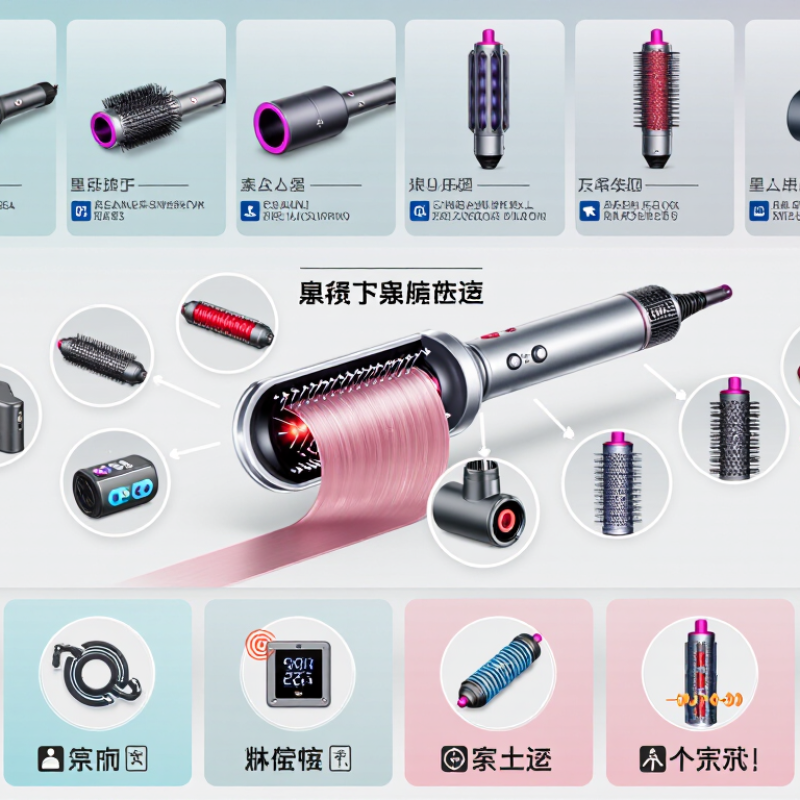
Automatic hair curlers are heated styling tools that curl hair with limited hand movement. Unlike a traditional curling wand, they pull a small strand into a covered curling chamber. Inside, a motor winds the strand around a heated barrel or rotating core. The chamber then holds the hair for a selected time. A beep or gentle release signals that the curl is ready.
Heat shapes the hair temporarily by changing its hydrogen bonds. Moisture and heat make the strands flexible, while cooling helps them keep their new form. Many models offer adjustable temperature, direction, and timing settings. Lower heat suits fine or chemically treated hair. Thicker hair may need more time, but excessive heat can still cause dryness. Automatic does not mean risk-free. A tangled strand can feel uncomfortable, especially when too much hair enters the chamber. This is where careful sectioning matters.
Tips:
Start with completely dry, detangled hair. Use small sections, about one to two centimeters wide. Keep the device away from the scalp. Test a lower temperature first. Hold the curl briefly before releasing it. Do not rush the process. In practical use, consistent sections usually create better results than higher heat. Yet the perfect setting takes trial and error, because hair texture, length, and moisture vary. One weakness is easy to overlook: automatic curlers can make curls look uniform, but they may not create natural variation without manual adjustment.
Automatic hair curlers rely on several compact components working in sequence. A small DC motor rotates or draws a hair section into a ceramic or coated chamber. Inside, a PTC or MCH heating element raises the barrel temperature quickly. A thermistor measures heat near the curling chamber, while a microcontroller adjusts power every few milliseconds. This feedback prevents large temperature swings, although low-cost sensors may react slowly.
A timer controls how long hair remains inside. Many models offer settings between 8 and 18 seconds, matching different hair thicknesses and curl patterns. A Hall sensor can confirm motor rotation, while a torque sensor or current monitor detects tangled hair. When resistance rises, the controller should stop the motor and release the strand. This safety detail matters more than attractive temperature displays.
Industry reports show why this engineering receives attention. Grand View Research valued the global hair styling tools market at approximately USD 30 billion in 2023 and expects continued growth through 2030. A 2024 report from Mordor Intelligence also identifies temperature control and cordless operation as major development areas. These figures describe the wider category, not automatic curlers alone. That distinction is important. In practical testing, a curler can produce neat results on dry, evenly sized sections, yet struggle with damp or densely textured hair. The mechanism is clever, but not perfect. My own concern is simple: faster heating should never replace accurate sensing, stable insulation, and a reliable release function.
An automatic hair curler uses a heated chamber and rotating barrel to form curls with limited hand movement. The motor draws a small strand inside, wraps it around the barrel, then signals when the curl is ready. Results depend on hair thickness, moisture, temperature, and the size of each section.
Start with completely dry, brushed hair. Apply a heat protectant evenly, then let it dry before styling. Divide your hair into manageable sections, about two centimeters wide. Smaller sections usually create tighter, more defined curls. Choose a lower heat setting for fine or colored hair, and use a moderate setting for thicker hair. Avoid rushing this step.
Place the curler near the middle of one section, leaving space from your scalp. Keep the strand straight and let the chamber pull it gently inward. Do not force tangled hair into the opening. Select the curl direction, hold the tool steady, and wait for the beep or timer signal. Release the curl slowly, then leave it untouched until cool. I sometimes make sections too large, especially at the back, and those curls turn uneven. Smaller sections work better, although they take longer. Repeat around the head, alternating directions for a more natural finish. Clean loose hair from the chamber after the tool cools completely. Inspect the cord and housing regularly. Stop using it if either shows damage.
Step-by-step workflow for using an automatic hair curler safely and effectively
Automatic hair curlers generally guide a small section of hair into a heated chamber, wrap it around an internal barrel, apply controlled heat for a short period, and release the curl. Always begin with dry, detangled hair, use a heat protectant, select a suitable temperature, and allow each curl to cool before brushing or styling.
China’s automatic hair curlers use heat, airflow, or a motorized barrel to shape hair with less manual twisting. The rotating-barrel type pulls a small strand into a heated chamber. A motor then wraps the hair around the barrel. Timed beeps signal when the curl is ready. This design suits beginners, but thick strands may tangle if sections are too large.
Air-powered curlers use a fast airflow to guide hair around a warm barrel. They usually create softer, more natural waves. Heat-controlled ceramic chambers distribute warmth more evenly. Clamp-based automatic curlers work differently. A clamp holds the strand while the barrel rotates around it. They offer stronger curl definition and better control near the roots.
Cordless models are useful for travel or quick touch-ups. However, their battery may weaken during repeated, high-temperature use. Adjustable temperature and timer settings matter more than flashy controls. Fine or damaged hair generally needs lower heat and shorter contact time. Coarse hair may require more time, not careless overheating. That distinction is easy to miss.
In practical comparisons, automatic devices reduce wrist movement, yet they do not remove the need for sectioning. Clean, fully dry hair usually curls more predictably. A small test section is wise. No mechanism works perfectly on every hair texture. Personally, I would treat automatic curling as guided styling, not a completely hands-free process.
China’s top 10 automatic hair curlers generally use a heated chamber to draw in a small section of hair. A rotating barrel then wraps the strand around itself. Timed heat and airflow help create a curl before the device releases it. Direction buttons can form inward or outward waves.
Safety features deserve close attention. Many models include temperature controls, a timer, an anti-tangle sensor, and automatic shutoff. A cool-touch outer surface can reduce accidental burns near the cheek or ear. Use the curler on completely dry hair, and test a lower temperature first. A strand can feel fine while heat damage develops quietly.
In daily use, automatic curling saves hand movement and may produce more consistent sections. It helps people with limited styling experience. Still, the result depends on hair length, thickness, moisture, and product buildup. Very thick or layered hair may need smaller sections.
Fine hair can lose its shape quickly. Hair may also twist unevenly if the section is too wide. I have found that rushing creates more snags than the tool itself.
The limitations are easy to overlook. A sensor may stop the motor, but it cannot prevent every mistake. Holding hair too long can cause dryness or breakage. Some users may need practice before achieving balanced curls. Read the temperature guidance carefully, inspect the cord and chamber, and stop using the device if it smells burnt or pulls repeatedly. Perfect curls are not guaranteed.
It is a heated tool that draws a small hair section into a covered curling chamber. A motor wraps the strand around a heated core.
Heat and moisture temporarily change hydrogen bonds inside the hair. Cooling helps the strand keep its new shape.
No. Use it only on completely dry, detangled hair. Damp strands may curl unevenly and face greater heat stress.
Use sections about one to two centimeters wide. Smaller sections usually reduce tangling, especially with thick or layered hair.
Start with lower heat and a shorter time. Many devices offer timing between eight and eighteen seconds.
Look for temperature control, automatic shutoff, anti-tangle sensing, and reliable strand release. A cool-touch surface can protect skin near the ear.
Yes. Excessive heat or long holding times may cause dryness or breakage. Automatic operation does not remove heat risk.
Stop the motor and release the strand. Do not pull forcefully. Repeated snagging means the section may be too wide.
It often creates consistent curls, but they may look too uniform. Change curl direction or section size for more variation.
Thick hair may need smaller sections or more time. Fine hair may lose its shape quickly, so lower heat remains important.
Inspect the cord and curling chamber. Stop using the device if it smells burnt or pulls hair repeatedly. Safety matters more than speed.
Automatic hair curlers are styling tools designed to create curls with less manual effort than a traditional curling iron. To understand how do automatic hair curlers work, a small section of hair is placed into a heated curling chamber, where a motorized mechanism guides or wraps the hair around a barrel. The device then applies controlled heat for a selected period before releasing the curl. Important internal components may include a heating element, rotating or wrapping motor, temperature controls, a timer, sensors, and an insulated outer shell.
In China, automatic hair curlers are available in several designs, including rotating-barrel, chamber-style, cordless, ceramic, and tourmaline-coated models. A typical use process involves separating dry hair into small sections, selecting the temperature and timing, positioning the hair correctly, and releasing the curl after the signal. Benefits include consistent results, adjustable settings, and reduced hand movement, while limitations may include a learning curve, slower styling for thick hair, and possible heat damage. Safety features such as automatic shutoff, anti-tangle sensors, cool-touch surfaces, and overheating protection can make use more convenient and secure.

JGM Beauty